
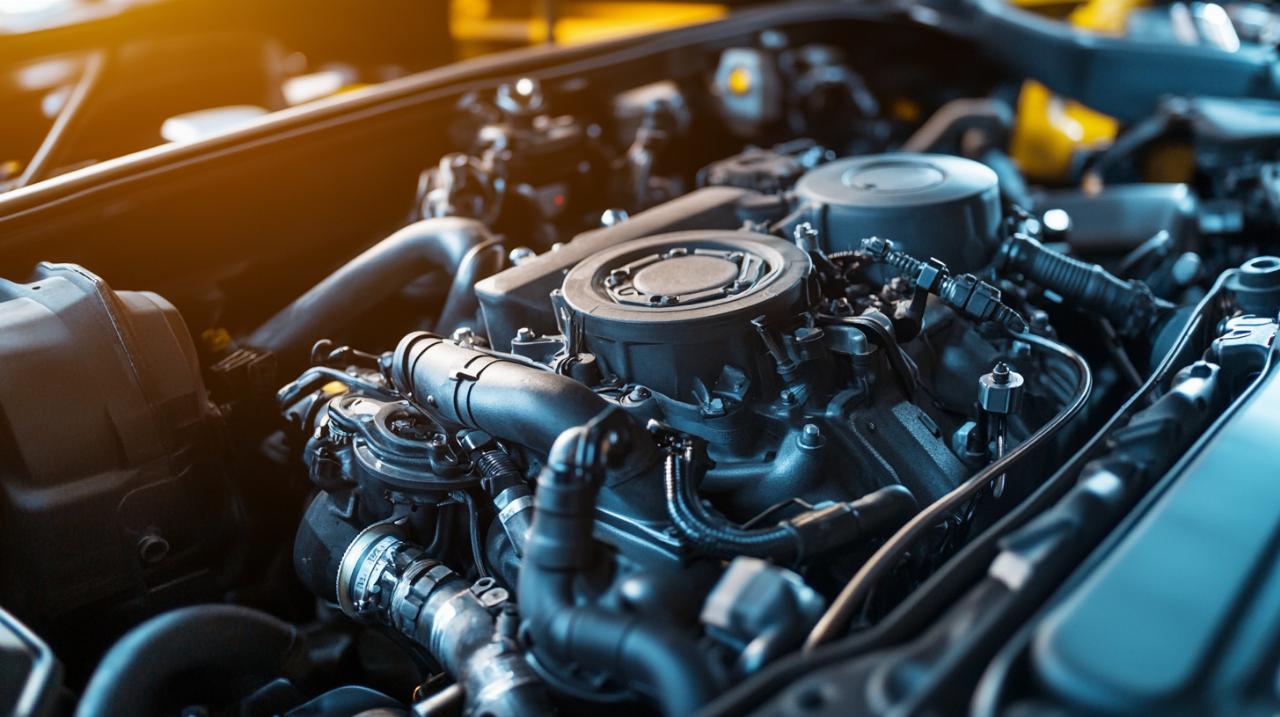
When a diesel engine refuses to fire up, the frustration can be immense, particularly for those relying on their vehicles or machinery for daily operations. While traditional mechanical issues like fuel blockages or worn components often come to mind, the role of the Engine Control Module, commonly known as the ECM, cannot be overlooked. This sophisticated electronic brain governs nearly every aspect of modern diesel engine operation, from fuel injection timing to emission controls. When the ECM develops faults, the engine may crank over without starting, leaving drivers puzzled and stranded. Understanding how ECU problems manifest and how to address them is essential for anyone working with contemporary diesel engines.
Common ecu faults that prevent diesel engine starting
The Engine Control Module orchestrates a complex ballet of sensors, actuators, and precise timing sequences to bring a diesel engine to life. When this intricate system encounters a fault, the consequences can range from poor performance to complete failure to start. Modern diesel engines have evolved significantly to meet stringent environmental regulations, with EPA Tier 4 emission standards driving manufacturers to cut nitrogen oxides and particulate matter by up to ninety percent compared to earlier Tier 3 engines. This achievement relies heavily on sophisticated electronic control, which means that ECM failures now represent a significant proportion of no-start conditions in diesel engines.
Sensor Failures and Their Impact on Engine Starting
The ECM depends on a network of sensors to monitor everything from crankshaft position to fuel temperature, air intake conditions to exhaust gas composition. When a critical sensor fails or provides erroneous data, the Engine Control Module may refuse to allow the engine to start as a protective measure. Sensor reference voltage irregularities often indicate developing problems, as the ECM supplies a precise voltage to each sensor and expects consistent readings in return. A failing crankshaft position sensor, for instance, can prevent the ECM from determining the correct moment to inject fuel, leaving the engine cranking endlessly without ignition. Temperature sensors play an equally vital role, particularly in cold weather when the ECM must adjust glow plug timing and fuel delivery to compensate for reduced combustion efficiency. Early warning signs of sensor-related ECM issues include irregular engine performance, reduced fuel efficiency, erratic idle, and hard starts that progressively worsen over time. Diagnostic Trouble Codes, known as DTCs, become invaluable in these situations, as they can pinpoint which sensor has fallen outside acceptable parameters, allowing technicians to focus their efforts on the specific component causing the no-start condition.
Corrupted ecu software and programming issues
Beyond physical sensor failures, the software governing the Engine Control Module can become corrupted or develop conflicts that prevent proper engine operation. These digital faults can arise from interrupted software updates, voltage spikes during jump-starting procedures, or simply degradation over time as components age. The ECM stores intricate maps for injector pulse width, turbocharger boost control, and emission system operation, all calibrated to work in harmony. When this programming becomes corrupted, the controller may fail to execute the starting sequence correctly, even when all mechanical components function perfectly. In some cases, the ECM enters a protective mode after detecting what it interprets as a critical system failure, locking out the starting sequence until the fault is cleared and the system reset. Professional software analysis becomes necessary to identify these issues, as standard diagnostic tools may not reveal the subtle programming conflicts that prevent engine operation. The complexity of modern common rail systems, which operate at extremely high pressures and require microsecond precision in injection timing, means that even minor software glitches can render an engine completely non-functional.
Diagnosing engine control unit problems in diesel engines
Accurate diagnosis separates a quick repair from an expensive saga of trial and error replacement. The sophisticated nature of modern diesel engine control systems demands a methodical approach that combines electronic testing with traditional mechanical inspection. Many technicians have learned through costly experience that assuming ECM failure without proper testing can lead to unnecessary replacement of expensive components, as underlying wiring or sensor issues often masquerade as controller faults. Specialists in the field, such as those at Valley Fuel Injection & Turbo in Woodland, California, emphasize the importance of comprehensive testing before condemning an Engine Control Module, particularly given that electrical and wiring checks should be performed before replacing the ECM.

Reading fault codes and error messages
The first step in diagnosing ECU-related starting problems involves connecting a quality diagnostic scanner to retrieve stored Diagnostic Trouble Codes. These alphanumeric codes provide a starting point for investigation, though interpreting them requires understanding that a DTC often points to a symptom rather than the root cause. For example, a code indicating injector circuit malfunction might stem from a faulty injector, damaged wiring, or an ECM output failure. Modern diesel engines from manufacturers including Cummins, Duramax, Case New Holland, and Komatsu each use proprietary code systems that require specific diagnostic equipment for accurate interpretation. Beyond simply reading codes, monitoring live data streams allows technicians to observe sensor readings and ECM outputs in real time, revealing intermittent faults that might not trigger stored codes. The CAN bus network, which facilitates communication between various control modules throughout the vehicle, can itself develop faults that prevent proper engine operation. Stability issues on this communication network often manifest as multiple seemingly unrelated fault codes, creating confusion about the actual problem location. Professional diagnostic procedures include verifying that all sensor readings fall within manufacturer specifications, checking that the ECM responds appropriately to inputs, and ensuring that communication between modules occurs without interruption.
Testing ecu connections and wiring harnesses
Once fault codes have been retrieved and analyzed, attention must turn to the physical connections between the ECM and the rest of the engine. Internal ECM failure can only be confirmed after measuring output quality, communication stability, and functional logic throughout the system. The process begins with fundamental checks of grounding, power feed, connectors, and harness integrity, as these basic electrical issues account for a surprising proportion of apparent ECM failures. Corrosion within connectors, particularly in engines exposed to harsh conditions, creates resistance that disrupts signal quality and can prevent the controller from executing the starting sequence. Each pin in the ECM connector serves a specific purpose, from providing power and ground to carrying signals from dozens of sensors and commands to various actuators. Testing requires patience and precision, as technicians must verify continuity, resistance, and voltage at multiple points throughout the harness. Evaluating injector pulse width consistency, CAN bus network stability, sensor reference voltage accuracy, and temperature behaviour provides insight into whether the ECM itself has failed or whether external factors are preventing normal operation. Bench load testing, software verification, and comparison of live data against OEM parameters form part of the professional testing protocol that definitively determines whether an Engine Control Module requires replacement or whether repairs to associated components will restore functionality.
Repairing and preventing ecu-related starting problems
After identifying an ECM fault as the cause of a no-start condition, vehicle owners face decisions about repair options and long-term prevention strategies. The financial implications of these choices can be substantial, given that replacement Engine Control Modules often represent one of the most expensive single components in a modern diesel engine. Companies specializing in diesel engine parts, such as Goldfarb & Associates, which has operated for over twenty-five years from their Rockville, Maryland location, offer various options including new, rebuilt, and used components that can significantly reduce repair costs without compromising reliability.
Ecu repair versus replacement options
When faced with a failed Engine Control Module, the traditional approach has been outright replacement with a new unit from the vehicle manufacturer. However, this route often proves unnecessarily expensive, particularly for older engines where aftermarket and rebuilt options provide equivalent functionality at a fraction of the cost. Specialized ECM repair services have emerged that can address specific failures within the controller, from replacing damaged circuit boards to reprogramming corrupted software, often completing work within days rather than the weeks sometimes required for new parts to arrive. Exchange programmes offered by diesel specialists allow customers to return their failed unit after receiving a tested replacement, reducing costs further while ensuring minimal downtime. These rebuilt units undergo comprehensive bench testing and software verification to ensure they meet original equipment manufacturer parameters before being returned to service. For commercial operators running multiple vehicles or pieces of equipment, establishing trade accounts with reputable diesel parts suppliers provides access to preferential pricing and priority service that can prove invaluable when facing unexpected breakdowns. The decision between repair and replacement often hinges on the age and value of the engine, availability of specific ECM models, and urgency of getting equipment back into service. Authorised dealers for major manufacturers such as Bosch, Delphi, Kubota, Yanmar, and Alliant Power maintain extensive inventories of both new and reconditioned Engine Control Modules, ensuring that solutions exist for virtually any diesel engine configuration.
Preventative maintenance to protect your engine control unit
While ECM failures can occur unexpectedly, implementing proper preventative maintenance significantly reduces the likelihood of controller problems. The electrical environment surrounding an Engine Control Module profoundly affects its longevity, with clean, stable power supply and proper grounding forming the foundation of reliable operation. Regular inspection of wiring harnesses identifies developing issues before they cause failures, as abraded insulation, corroded connectors, and damaged pins create electrical resistance that stresses the ECM and can lead to premature failure. Protecting the controller from moisture and contaminants extends its service life, particularly in engines operating in harsh environments where dust, chemicals, and temperature extremes challenge electronic components. Maintaining the fuel system in optimal condition reduces demands on the ECM, as clogged fuel filters and failing injection pumps force the controller to compensate for poor fuel delivery, potentially masking developing problems until catastrophic failure occurs. Approximately forty percent of diesel no-start cases stem from fuel starvation, twenty-five percent from air in the fuel system, and twenty percent from glow plug failure, with injection pump problems or severe compression loss accounting for the remaining fifteen percent. Addressing these mechanical issues promptly prevents the ECM from operating outside normal parameters, reducing stress on its internal components. Regular software updates from manufacturers often include improvements to engine management strategies and corrections for known issues, making periodic reprogramming a worthwhile investment in long-term reliability. For those seeking comprehensive diesel maintenance, specialists offering services ranging from fuel injection system repair to turbocharger service provide the expertise needed to keep modern engines operating at peak efficiency while protecting expensive electronic components from premature failure.